




In the world of performance art and comedy, few names are as enigmatic, groundbreaking, and discussed as Andy Kaufman. He defied the typical trajectory of a stand-up comedian or television star, choosing instead to blur the lines between reality and performance. Among his most iconic and talked-about appearances was his debut on Saturday Night Live (SNL) in 1975, during which he performed an absurdly minimalistic lip-sync act to the Mighty Mouse theme song. This moment not only introduced Kaufman to a national audience but also redefined what performance could mean on television. The Andy Kaufman Mighty Mouse act was more than a gag—it was a cultural reset, and in this 4000-word article, we’ll explore how this brief performance left a lasting impression on entertainment history.
The Rise of Andy Kaufman: A Precursor to Genius
Before the world witnessed the now-famous Andy Kaufman Mighty Mouse sketch, Kaufman was already making waves in the underground comedy scene. Unlike traditional comedians who relied on punchlines and set-up jokes, Kaufman leaned heavily into character-based comedy, performance art, and anti-humor.
He would often perform as bizarre characters like Foreign Man (a precursor to his character Latka Gravas on Taxi) or alter-egos like the abrasive lounge singer Tony Clifton. What made Kaufman unique was his deep commitment to the absurd. He didn’t just play a role—he became it.
Saturday Night Live: A Cultural Revolution
In 1975, Lorne Michaels launched Saturday Night Live, a show that would go on to revolutionize television comedy. The show’s early format included a mix of sketch comedy, musical guests, and experimental performances. Michaels was eager to include avant-garde artists, and Andy Kaufman was a natural choice. cwbiancaparenting
Michaels had seen Kaufman perform at comedy clubs and recognized the brilliance in his unorthodox style. When it came time to assemble talent for the first-ever episode of SNL, Kaufman was invited to showcase one of his stranger acts—the Mighty Mouse bit.
The Mighty Mouse Theme Song: An American Classic
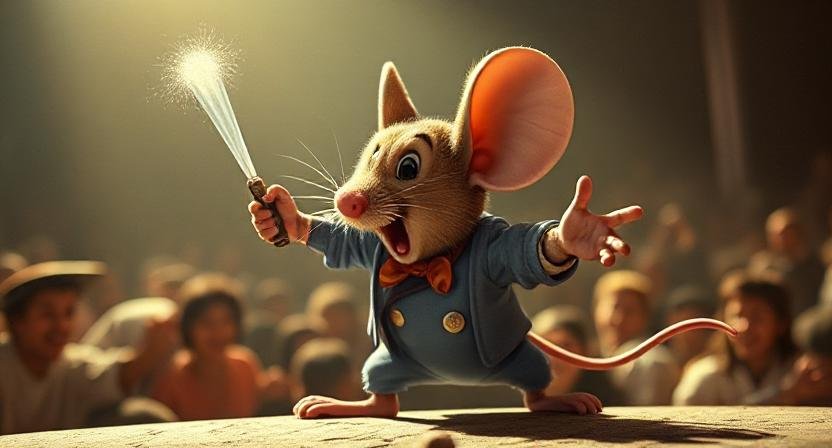
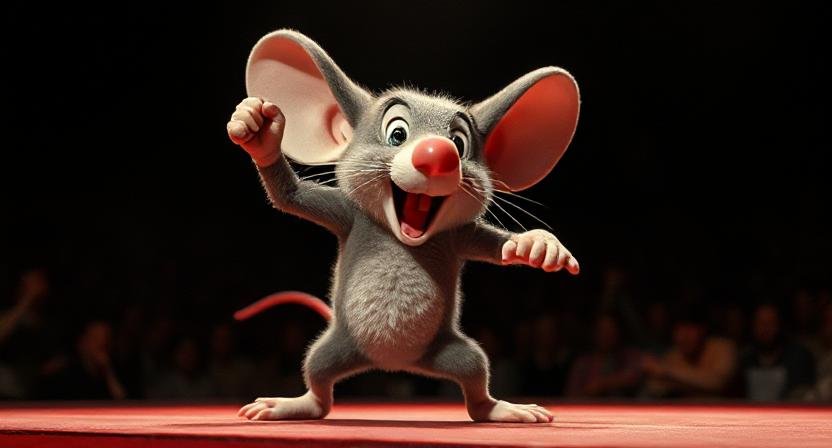
“Mighty Mouse,” a cartoon superhero created by Paul Terry in 1942, had a theme song that was instantly recognizable to American audiences. The line “Here I come to save the day!” was especially memorable. Kaufman saw in this cartoon anthem an opportunity to toy with the audience’s expectations.
He prepared a record of the Mighty Mouse theme song and designed a performance around it that would upend traditional comedy expectations. It was a strange idea: a grown man standing in awkward silence, waiting for his cue to lip-sync a single line with exaggerated enthusiasm.
The Andy Kaufman Mighty Mouse Performance
On October 11, 1975, millions of Americans tuned in to the first episode of Saturday Night Live. As the show unfolded, a segment began featuring a lanky, odd-looking man standing silently on stage next to a record player. The music began to play—the Mighty Mouse theme song.
For long stretches, Kaufman stood still, looking around awkwardly, doing nothing as the song played. Then, at the climactic line, “Here I come to save the day!”, he suddenly brought his hand to his chest and lip-synced the lyric with over-the-top emotion before freezing again. He repeated this act with each chorus.
There were no jokes. No dancing. No costumes. Just a man seemingly out of place and out of sync. And yet, the audience was captivated. The laughter that followed was hesitant at first—then explosive.
Deconstructing the Moment: What Made It Brilliant?
The brilliance of the Mighty Mouse performance lies in its simplicity and subversion. Kaufman took an absurd premise—a man doing almost nothing—and made it funny. But why did it work?
a. Anti-Humor
Kaufman was a master of anti-humor: comedy that refuses to deliver a punchline or plays off the discomfort of the audience. The Mighty Mouse sketch was a textbook example. The joke wasn’t in the action but in the lack of it. nixcoders
b. Timing and Tension
by remaining still for so long between the lyric, Kaufman built tension. The audience didn’t know what to expect, and their anticipation created a release of laughter when the moment came.
c. Performance as Conceptual Art
Kaufman viewed performance as an art form, not merely entertainment. The Mighty Mouse bit challenged the very definition of performance, raising questions about what it means to “do” something on stage.
Audience Reaction and Critical Acclaim
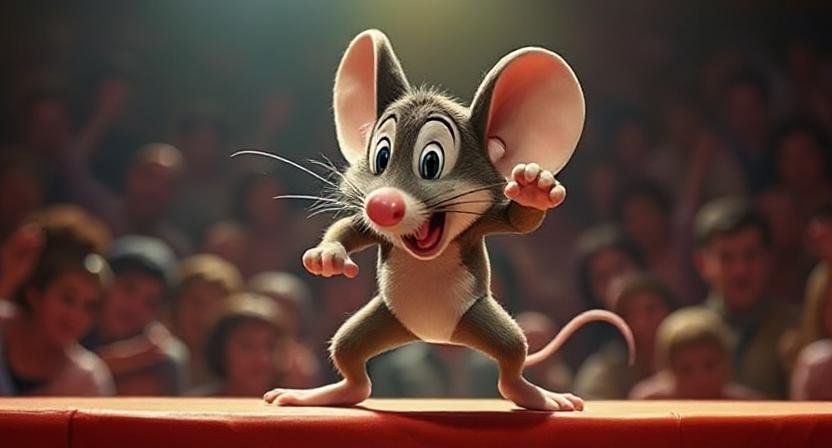
The reaction to the Andy Kaufman Mighty Mouse act was overwhelmingly positive, although mixed with confusion. Many viewers at home were baffled. Some thought it was a technical glitch. But in comedy circles, Kaufman’s name was immediately elevated to legendary status.
Critics called it “a moment of pure absurdity” and praised Kaufman’s courage to defy all norms. Lorne Michaels reportedly said that the performance embodied the kind of risk-taking he wanted SNL to represent.
Kaufman’s quirky demeanor, combined with his willingness to be vulnerable and unpredictable, resonated deeply with a generation looking for something new.
The Influence of the Mighty Mouse Act on Future Comedy
The Andy Kaufman Mighty Mouse performance didn’t just become a viral moment (in a pre-internet era); it influenced an entire generation of performers. Modern comedians like Jim Carrey, Eric Andre, and Sacha Baron Cohen have all cited Kaufman as an inspiration.
a. The Absurd and the Meta
Postmodern comedy often plays with form and expectation. Kaufman’s approach helped usher in this style. Sketch shows like Tim and Eric Awesome Show, Great Job! owe much to Kaufman’s surreal aesthetic.
b. Breaking the Fourth Wall
The sketch broke the fourth wall by making the audience part of the tension. Kaufman wasn’t playing a character; he was himself, standing awkwardly, forcing viewers to question what they were watching.
c. Comedy as Performance Art
Thanks to Kaufman, the lines between comedy, performance, and theater blurred. Performance artists in the 1980s and 1990s embraced this approach, using silence, repetition, and minimalism in their work.
Jim Carrey and the Kaufman Legacy
Jim Carrey’s portrayal of Andy Kaufman in the film Man on the Moon (1999) reintroduced the Andy Kaufman Mighty Mouse sketch to a new generation. In the film, Carrey recreated the bit with meticulous detail, paying homage to the surreal moment that changed television comedy.
Carrey has spoken often about the emotional impact Kaufman had on him. He admired how Kaufman never cared whether the audience liked him—only whether they were feeling something. andy kaufman death
The film helped cement the legacy of the Mighty Mouse performance as a seminal moment in modern entertainment.
Misinterpretation and Criticism
Not everyone appreciated the Mighty Mouse act. Some critics dismissed it as nonsensical or self-indulgent. In fact, one of the recurring critiques of Kaufman’s work was that he was “playing a joke on the audience.”
But that’s exactly what Kaufman wanted. He once said, “I’m not a comedian. I never told a joke in my life.” To him, confusion, discomfort, and ambiguity were valid emotional responses—just as valid as laughter.
Revisiting the Legacy Today
Nearly 50 years after it aired, the Andy Kaufman Mighty Mouse sketch remains a critical moment in pop culture history. It is still taught in courses on performance art, comedy history, and media studies.
On YouTube and other platforms, the clip continues to go viral periodically, drawing new fans into Kaufman’s strange and wonderful world. It’s also referenced in think pieces and documentaries about the evolution of television comedy.
Why the Sketch Still Resonates?
In today’s world of short attention spans and viral content, the Andy Kaufman Mighty Mouse act feels oddly prescient. It was short. It was weird. And it went viral in the 1970s sense of the term.
a. Minimalism in Performance
Kaufman’s sketch anticipated modern minimalist comedy. Shows like Nathan For You and The Rehearsal succeed by embracing awkwardness and silence.
b. Disruption as Art
Kaufman disrupted a live TV show in a way that felt punk rock. That rebellious spirit is still revered today in alternative comedy scenes.
Kaufman’s Impact on Television and Identity
The Andy Kaufman Mighty Mouse sketch was more than just an introduction; it was a declaration of intent. Kaufman never wanted to be a conventional star. That three-minute moment on SNL perfectly illustrated his ethos.
He created personas, staged fake feuds, and even faked his own death—or so some fans believe. That uncertainty, that inability to pin him down, is what makes his Mighty Mouse act even more significant.
Teaching the Sketch in Academic Circles
In colleges and universities, Kaufman’s work is now the subject of academic study. The Mighty Mouse bit is analyzed in performance theory courses, often used to illustrate:
- The deconstruction of comedic form
- Media reflexivity
- Audience expectation and interaction
- The tension between sincerity and satire
The Human Side of Andy Kaufman
Despite his avant-garde performances, Kaufman was known to be deeply sensitive and spiritual. He meditated, practiced yoga, and avoided drugs and alcohol. His approach to comedy wasn’t cynical—it was pure.
The Mighty Mouse act wasn’t done out of mockery, but out of childlike wonder. That’s part of what makes the performance so affecting. It wasn’t mean-spirited. It was weird, yes—but it came from a place of playfulness.
Remembering the Moment: A Time Capsule of Genius
There are countless classic moments in the history of Saturday Night Live, but few are as singularly strange and impactful as the Andy Kaufman Mighty Mouse performance. In just a few minutes, Kaufman challenged, confused, and captivated a nation.
It remains one of the most rewatched, referenced, and revered performances in comedy history. And it all started with a man standing silently, waiting for a cartoon lyric to “save the day.”
Conclusion
The Andy Kaufman Mighty Mouse sketch is more than just a quirky footnote in the history of comedy—it’s a foundational moment. It showed that performance could be about discomfort, that comedy could be abstract, and that entertainment could also be art. Kaufman changed the rules that night in 1975, and we’re still living in the world he helped shape.
Whether you laugh, cringe, or sit in stunned silence, one thing is certain: you’ll never forget the moment Andy Kaufman lip-synced to Mighty Mouse.