




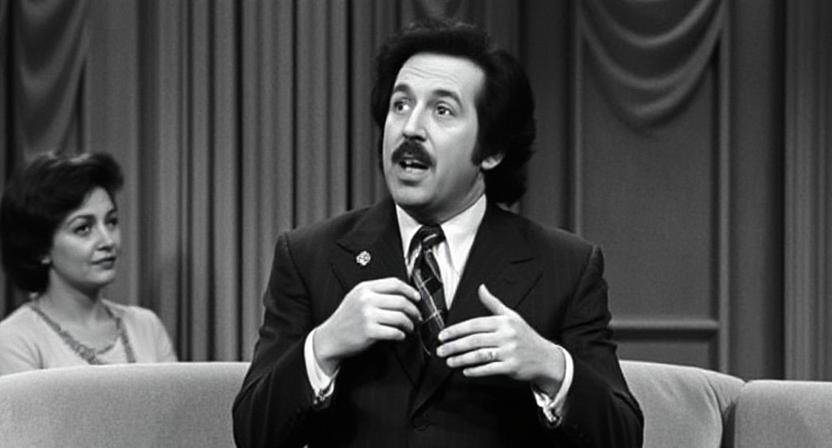
Andy Kaufman’s relationship with “Saturday Night Live” (SNL) was anything but ordinary. A groundbreaking performer whose comedy defied all conventions, Kaufman treated his appearances on SNL not as performances but as experiments. From lip-syncing the “Mighty Mouse” theme song to bizarre wrestling skits and deeply polarizing character work, Andy Kaufman SNL challenged audiences to ask: Is this even comedy? This article delves deep into the intersection of Andy Kaufman and SNL—how the late-night comedy platform became both a springboard and a battleground for one of entertainment’s most misunderstood geniuses.
The Rise of Andy Kaufman: A Brief Overview
Before discussing the complex relationship between Andy Kaufman and SNL, it is essential to understand who Kaufman was. Born on January 17, 1949, in New York City, Kaufman was never your typical stand-up comic. He didn’t tell jokes. Instead, he performed characters—often strange, sometimes irritating, but always unforgettable. Whether it was the sweet foreigner Latka Gravas on the sitcom Taxi or his rude lounge singer alter ego Tony Clifton, Kaufman blurred the lines between reality and performance.
He viewed comedy as a means of exploring social boundaries, emotional discomfort, and public perception. And when Saturday Night Live came calling in the mid-1970s, it offered him the perfect canvas for his abstract brand of humor.
The Debut: Andy Kaufman’s First Appearance on SNL
Andy Kaufman SNL debut came on the very first episode of the show’s existence, which aired on October 11, 1975. This marked not just a milestone for Kaufman but for American television comedy as a whole.
He didn’t speak much. Instead, he played a record of the Mighty Mouse theme song, standing motionless except for the chorus where he would dramatically lip-sync: “Here I come to save the day!” The act lasted less than two minutes but became iconic. It was confusing. It was weird. And it was unlike anything viewers had seen on late-night TV. More importantly, it embodied everything Kaufman stood for: unpredictability, emotional tension, and absurd humor.
That moment also set the tone for the show itself—Saturday Night Live wasn’t just another sketch comedy program; it was a place where the rules could be rewritten.
The Experimental Nature of Kaufman’s Comedy
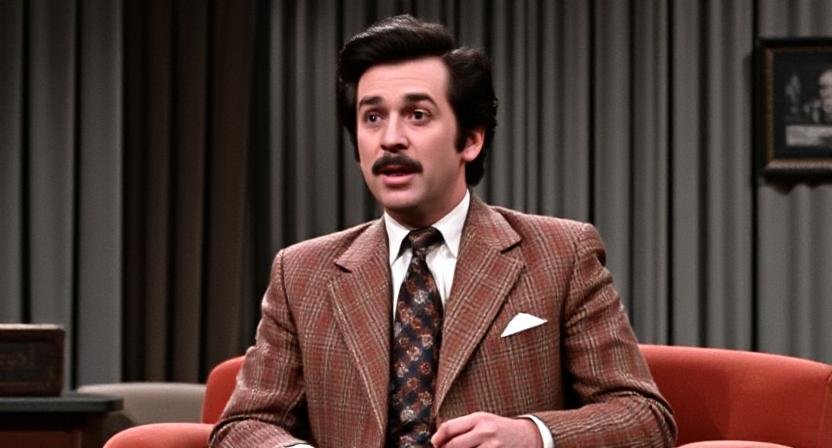
What made Andy Kaufman SNL so mesmerizing was his willingness to use the live television format as an experimental space. Unlike other comedians who wrote tight sets or punchy monologues, Kaufman’s bits often felt like performance art.
Take, for instance, his “Foreign Man” character. He would bumble through terrible impressions until finally nailing a spot-on Elvis Presley impersonation. The crowd would erupt, and the genius of the setup would become clear. On SNL, this tactic felt revolutionary. Viewers weren’t sure whether to laugh, feel uncomfortable, or change the channel.
But that was precisely Kaufman’s aim. He wasn’t there to please the audience—he was there to explore reactions.
The Wrestler of Women: A Controversial Shift
While Andy Kaufman SNL appearances started off endearing and bizarre, things took a much more divisive turn as the years progressed. In the early 1980s, he introduced a bit where he claimed to be the “Inter-Gender Wrestling Champion of the World,” challenging women from the audience to wrestle him live.
The concept was offensive to many. It was also part of a bigger narrative Kaufman had crafted to blur the lines between reality and absurdity. The live TV format made it even more intense. Women from the audience would come up, wrestle him, and Kaufman would trash-talk them, treating the scenario with absolute seriousness.
NBC and SNL executives began receiving complaints. Even other cast members questioned whether Kaufman had gone too far. Eventually, the audience would be given the final say.
The Infamous Ban: Viewers Vote Kaufman off SNL
In 1982, SNL did something unprecedented. During the episode hosted by Ed Koch, a live poll was conducted asking viewers whether Andy Kaufman should be banned from SNL permanently.
It was one of the first instances of interactive television used for something other than entertainment—it was a real decision with actual consequences. Over 195,000 people called in. 169,186 voted to “Dump Andy” while only 86,317 voted to “Keep Andy.” That was the end of Kaufman’s appearances on Saturday Night Live.
To this day, the event remains one of the most controversial moments in the show’s history.
Behind the Scenes: The Lorne Michaels and Kaufman Dynamic
Lorne Michaels, the creator and longtime producer of SNL, was known for his admiration of edgy comedy. Michaels appreciated Kaufman’s originality and allowed him considerable freedom. But as the controversy over Kaufman’s wrestling antics escalated, even Michaels faced internal pressure.
Though Lorne respected Kaufman’s vision, NBC executives were becoming increasingly wary. The wrestling act had become polarizing, and ratings were at stake. The democratic poll wasn’t just a gag—it was a compromise. Instead of the network deciding Kaufman’s fate, they handed the reins to the viewers.
The loss of Kaufman from the SNL stage was bittersweet. Michaels later remarked that Kaufman was one of the few performers who truly understood the power of live television. cross-platform app development by garage2global
The Legacy: How Kaufman Changed SNL Forever
While Andy Kaufman SNL had a turbulent arc, his impact is still felt on the show decades later. Modern SNL cast members often cite Kaufman as a trailblazer who opened the door for more avant-garde, risky comedy.
The likes of Will Ferrell, Kristen Wiig, and Fred Armisen have all dabbled in surrealist, character-based comedy reminiscent of Kaufman. And sketches that intentionally blur fiction and reality owe a debt to Kaufman’s legacy.
Even in moments of parody, such as the “Too Many Cooks” viral short or Nathan Fielder’s The Rehearsal, the influence of Kaufman’s SNL work is unmistakable. His comedic DNA lives on not just in SNL but in modern satire as a whole. andy kaufman mighty mouse
Theories and Speculation: Was the Ban a Bit?
Some fans still argue that the entire “ban Andy Kaufman from SNL” poll was another Kaufman meta-prank—a long-form performance within a performance. Kaufman was known for planting hoaxes, including faking fights and even orchestrating his own “death” in certain theories.
Could the vote have been rigged? Was Kaufman in on it? Did he engineer his own removal as a final, rebellious act? While there’s no definitive proof, the theory adds another layer to the fascinating, often maddening world of Andy Kaufman SNL.
It’s exactly the kind of ambiguity Kaufman loved to foster—leaving people to wonder whether they were watching comedy, tragedy, or simply a social experiment gone awry.
Audience Reaction: Love, Hate, and Everything in Between
No conversation about Andy Kaufman SNL performances would be complete without mentioning the audience. Rarely has a performer inspired such extreme reactions.
Some saw Kaufman as a comedic genius—an artist pushing the boundaries of what performance could be. Others viewed him as a fraud, a provocateur whose antics wasted airtime and insulted the intelligence of viewers.
The diversity in audience reaction was, in itself, part of the performance. Kaufman believed that art wasn’t supposed to be universally liked. If people were divided, if emotions ran high, if confusion lingered—he had done his job.
The Jim Carrey Connection: ‘Man on the Moon’
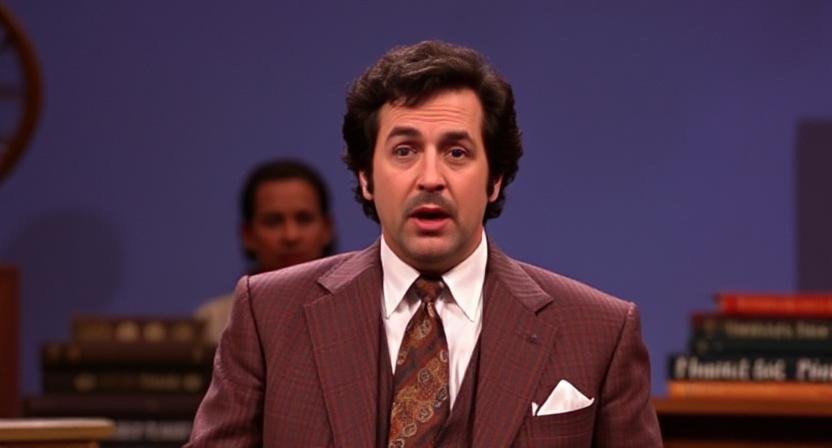
In 1999, Kaufman’s life was dramatized in the film Man on the Moon, with Jim Carrey playing the lead role. The film features several recreations of Andy Kaufman SNL performances, most notably the Mighty Mouse bit.
Carrey, channeling Kaufman, adopted many of his methods during filming—including staying in character off-camera. The behind-the-scenes documentary Jim & Andy: The Great Beyond explores how the spirit of Kaufman continued to impact actors and comedian’s decades after his death.
The film’s portrayal of SNL helps preserve Kaufman’s role in the show’s early legacy, cementing him as a foundational figure who helped define its rebellious tone.
A Unique Place in Television History
Few performers have left as complex a mark on live television as Andy Kaufman SNL. His segments were not merely entertainment; they were moments of cultural introspection. They asked the audience to question their assumptions about comedy, decency, and the purpose of television.
More than four decades later, his short but unforgettable time on Saturday Night Live remains one of the most intriguing chapters in TV history. The fact that people still debate his acts, his motives, and his sincerity speaks to the lasting power of his work.
Conclusion: Andy Kaufman on SNL – Genius or Madman?
So, who was Andy Kaufman on SNL—a genius or a madman? Maybe he was both. Maybe he was neither. Maybe that’s the point.
He used SNL not as a stage, but as a mirror—reflecting the absurdity, unpredictability, and emotional rawness of human interaction. His performances weren’t just sketches; they were questions asked in the language of comedy.
In the pantheon of great SNL performers, Andy Kaufman stands apart. Not because he was the funniest or the most polished, but because he changed the rules of the game. And in doing so, he reminded us that sometimes, the strangest acts hold the deepest truths.
Andy Kaufman SNL—those three words don’t just describe a comedian and a TV show. They represent a unique moment in cultural history where art, rebellion, and mass media collided in the weirdest, most wonderful way imaginable.