



In modern technical environments, systems depend heavily on reliable diagnostics to ensure smooth operation and quick recovery from faults. Error code frameworks serve as structured messages that help users and technicians identify and resolve problems efficiently. Among these frameworks, hcs 411gits error codes have gained attention for their role in guiding troubleshooting processes and standardizing fault interpretation. These codes represent a bridge between complex system behavior and human understanding, translating internal malfunctions into readable indicators that support corrective action.
Understanding error codes is not only important for specialists but also for everyday users who rely on stable digital tools. When an error appears, it can interrupt workflows, delay productivity, and create confusion. A well-defined coding structure simplifies this process by offering clarity and direction. This article explores the conceptual importance of error codes, how structured systems function, and why proper interpretation is essential for both technical teams and end users.
The Purpose of Error Code Systems
Error codes exist to provide meaningful communication between machines and humans. Instead of vague alerts or sudden failures, structured codes deliver specific information about what went wrong. This design allows problems to be categorized, tracked, and resolved in a systematic way.
For example, when hcs 411gits error codes appear in a system environment, they act as a signal that something has deviated from expected performance. The code itself may point to hardware malfunctions, configuration issues, or software conflicts. By presenting these faults in a concise numerical or alphanumeric format, the system avoids ambiguity and reduces the time required to diagnose issues.
Such frameworks also support documentation and reporting. Over time, patterns in error occurrences can reveal weaknesses in system design or user practices. Organizations can then implement updates, training, or redesigns to prevent similar problems in the future.
Common Causes of System Errors
Errors can arise from many sources, including human input, hardware limitations, or software instability. Recognizing these causes is essential to understanding how to respond effectively.
One of the most frequent triggers of hcs 411gits error codes is misconfiguration. Incorrect settings, outdated drivers, or incompatible software versions can disrupt normal processes. Another cause is resource limitation, such as insufficient memory or storage space, which can prevent tasks from completing successfully. how hcs 411gits software built
Environmental factors also play a role. Power fluctuations, network interruptions, and physical damage to components can generate faults. While these issues may seem external, they are often reflected internally through error codes that highlight communication breakdowns or performance failures.
Classification and Interpretation
Error codes are typically organized into categories that describe the type of issue encountered. These categories help users narrow down the source of the problem quickly.
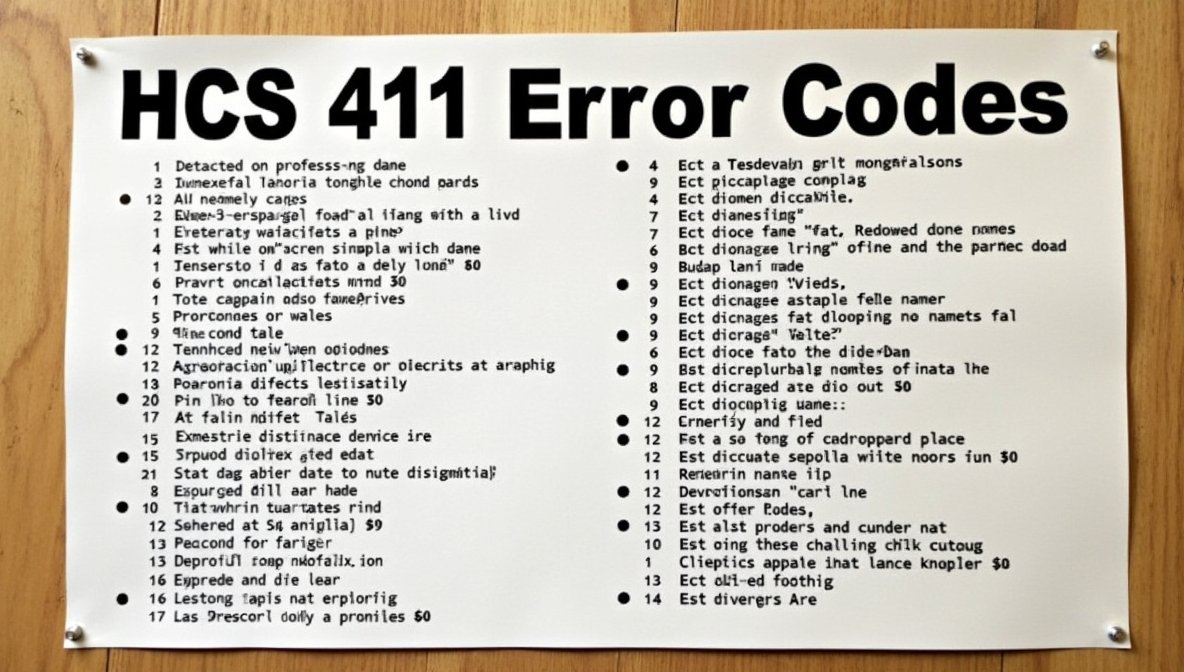
Within structured frameworks, hcs 411gits error codes can be interpreted by examining their numerical patterns and associated messages. For instance, some codes might correspond to network connectivity, while others relate to data processing or security validation. This categorization transforms complex system behavior into digestible information.
Interpretation also depends on context. A code that appears during installation may have a different implication than the same code during runtime. Therefore, effective troubleshooting requires not only knowledge of the code itself but also an understanding of when and how it appears.
Diagnostic Procedures
Once an error code is identified, the next step is diagnosis. This process involves confirming the problem, isolating its cause, and determining an appropriate response.
When encountering hcs 411gits error codes, technicians often begin by reviewing system logs. Logs provide a timeline of events that led to the fault, offering clues about what triggered the error. Diagnostic tools may also be used to test hardware performance, software compatibility, or network stability.
In addition, user actions are evaluated. If a problem consistently appears after a specific command or configuration change, this correlation can point directly to the root cause. Diagnosis is most effective when technical data and user behavior are analyzed together.
Preventive Strategies
Prevention is more efficient than correction. By reducing the likelihood of errors, organizations save time, resources, and frustration.
One effective strategy is regular system maintenance. Updates, patches, and routine checks help eliminate vulnerabilities that could lead to hcs 411gits error codes. Another approach is standardization. When systems follow consistent configuration guidelines, the risk of conflict decreases.
User education also plays a significant role. Many errors result from misunderstanding or misuse of tools. Training programs that explain system functions and best practices empower users to avoid common mistakes. Prevention is a shared responsibility between technology and people.
The Role of Documentation
Documentation serves as a reference point for interpreting and resolving issues. Clear manuals and knowledge bases help bridge the gap between error detection and resolution.
For systems that display hcs 411gits error codes, comprehensive documentation ensures that each code is accompanied by an explanation and suggested action. This transparency builds confidence and reduces dependency on external support. Users can take immediate steps to fix minor issues without waiting for assistance.
Well-maintained documentation also supports long-term system health. As new errors are discovered and resolved, updates to reference materials keep knowledge current and accessible.
User Training and Awareness
Technology is most effective when users understand how to interact with it responsibly. Training is not limited to teaching features but also includes explaining how to respond when something goes wrong.
Awareness of hcs 411gits error codes allows users to remain calm and methodical instead of panicking. Recognizing that an error code is a diagnostic tool rather than a sign of total failure changes the mindset from frustration to problem-solving.
Workshops, guides, and practical demonstrations can improve confidence. When users know what an error means and what steps to take, downtime is reduced and overall system reliability improves.
Integration with System Management
Modern systems rely on integration between error reporting and management platforms. Automated alerts, dashboards, and analytics transform error codes into actionable insights.
When hcs 411gits error codes are integrated into monitoring tools, they enable real-time awareness of system health. Administrators can see trends, detect anomalies, and address problems before they escalate. Integration also supports predictive maintenance by highlighting patterns that indicate future risks.
This proactive approach ensures that error codes are not merely reactions to problems but part of a strategic framework for stability and performance.
Future Developments in Error Handling
As technology evolves, so will the way errors are detected and communicated. Artificial intelligence and machine learning are already influencing diagnostic systems by enabling predictive analysis and automated responses.
Future models may enhance the usefulness of hcs 411gits error codes by linking them to self-healing mechanisms. Instead of simply notifying users of a fault, systems may correct it automatically or suggest optimized solutions based on historical data.
This evolution will shift error handling from reactive to adaptive. The focus will be on minimizing disruption and maximizing continuity of service.
Case-Based Perspective
Looking at real-world scenarios provides valuable insight into how structured error codes function in practice. When organizations encounter repeated faults, analyzing these events often reveals gaps in training, configuration, or infrastructure.
In such cases, hcs 411gits error codes act as indicators that highlight specific vulnerabilities. By addressing these signals, teams can implement targeted improvements. Over time, this process transforms isolated errors into opportunities for system enhancement.
Case-based learning also supports knowledge sharing. When solutions are documented and distributed, others can benefit from experience without repeating the same mistakes.
Conclusion
Error codes are essential tools for maintaining technological reliability. They translate internal system states into meaningful information that guides users toward resolution. The framework represented by hcs 411gits error codes demonstrates how structured communication can simplify complex technical processes and support efficient problem-solving.
From diagnosis and prevention to training and integration, every aspect of error handling contributes to system resilience. As technology continues to advance, error code systems will become even more intelligent and responsive. By understanding their purpose and potential, users and organizations alike can transform technical challenges into manageable tasks and build stronger, more dependable digital environments.